Sunday, April 9, 2023

SUCCESSION ON BEING TRUE TO WHO YOU ARE AS A SERIES

This week I'm going to write a lot about the latest episode of SUCCESSION. If you're not caught up and like the show, you should definitely not read this until you do. (In fact you might try implementing a media cone of silence, because yowza.)

So, here we go... Spoilers Ahoy. 
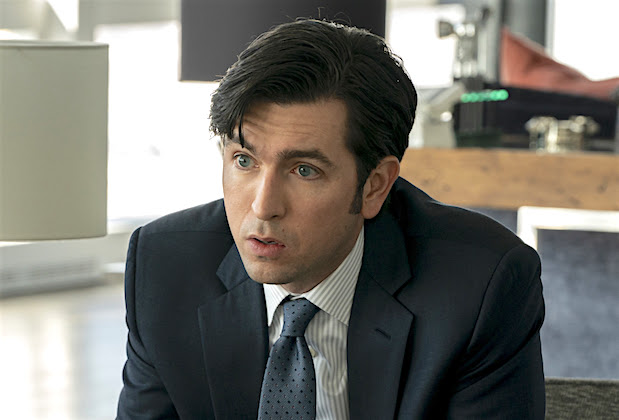
SUCCESSION 403 is The One Where Logan Dies. Which is um, definitely unexpected. The episode actually begins with Logan doing normal screwed up Logan stuff—asking Roman to do his dirty work; ditching Connor's wedding. Bad Dad Head Fuckery 101, basically. 

And then we get the phone call from Tom on the plane, which leads into this incredible, 28 minute sequence in which first Roman and and Kendall, then Shiv, and finally Connor are all forced to confront the fact that their father is dying...isn't breathing...is dead. 

And creator/writer Jesse Armstrong makes this really unexpected choice to not let us see Logan at all for a good portion of the sequence. We hear from Tom, we see stuff going on in the background, others also chime in, but there's no "Cut To: A stewardness doing chest compressions on Logan."

Objectively, that's super strange. That's not how you do these things on TV. A big part of the drama, in fact, is watching someone try to save the person's life. It's the will they make it or won't they. 

But here's what that choice does: it puts us in the same situation as the kids—but not just in terms of this moment, but in the broader context of the show. Logan Roy is the monster in the closet that you can never fucking kill. He is the shark that disappears only so that it can show up behind you and rip your fucking throat out. You are never fucking safe with him. A conflict with him is never over. 

Given that, of course they don't want to show us him falling ill, or dying, or dead, until the end (and even then they don't show us his face; I wouldn't be surprised if Brian Cox wasn't used at all). It's a way of leaving it open whether this is really happening, whether this isn't some next level mind fuck ruse of the all time mind fuck master. 

There are a hundred ways that Jesse Armstrong could have killed Logan Roy. And I think a lot of the press around this version is going to be about how it captures the death of a loved one, especially a parent, in such a real way. But as writers, let's not be fooled by that. SUCCESSION is not an after school series. This isn't a very special episode.

This is a series about three kids (sorry Connor—we'll get to you) who are constantly unsure where they stand with their father and desperate for it not to be like that but also completely incapable of overcoming him or themselves to get to that point. They live with constant instability and uncertainty.

And that's what's drives Armstrong's choice about how to show his death. The bigger concept drives the specific story decision. 

It's such a great model for us as writers. Whether we're doing a death, a dinner party, a high school dance, the point is absolutely the same. The concept of the show should inform our thinking to make our choices specific. 

To put it in terms of a question: What is the "Our Show" version of a death? A dinner party? A high school dance?


Friday, March 17, 2023

THE LAST OF US AND THE ARC OF THE COVENANT, PART II: REMEMBER YOUR RULES

So in THE LAST OF US season one Mazin and Druckmann scatter breadcrumbs to build the sense of something bigger at play on Ellie, deep feelings within her that are going to need to be released. 

But then, when you're plotting the actual moment where that happens, there's still the question of the specifics. What should occur? 

And you've got unlimited options, right? It's your show. Anything could happen.

But you and I both have seen way too many stories where the thing that does happen just does not feel right. To some extent my complaints about the David are an example of that. Her going full Wilding Mode on someone makes total sense to me. But this guy that she's murdering, he does not seem right. 

And I think this points to a key thing about writing a TV show. Whether we know it or not, every show we work on has an internal set of rules. A lot of them, actually—rules for how each character can and can't behave (which depending on your show could be A LOT of rules; rules for how the world of the show works, what kinds of things happen in this world and what don't; and rules for the series, by which I mean what kinds of stories do we tell her and in what kinds of ways. 

Sometimes you can break these rules and it's thrilling for the audience specifically because it's so unexpected. But almost always if you try you can trace back that rule break and find a way in which actually no, it does fit the show. For instance the last of THE GOOD FIGHT has an ongoing growing riot going on outside the law offices, and it keeps impeding on their work more and more. It's insane and scary and some might say, what the hell, that is not this show. Except when you step back, sure it is. It's just the latest and most profound sense of dislocation that one of the characters has been feeling since the very beginning. And this show is about that deepening instability. 

The rules of THE LAST OF US definitely include the possibility of Ellie going completely nuts. While we haven't seen her do that yet, we have seen her confront some terrible things, and we've seen some scary stuff running across her face at times. So that part checks out. 

But the rules of THE LAST OF US also include the idea that every character is actually trying to proceed out of some kind of experience of love. Which is also to say, that every character has the ring of truth about them. They resist tropes. 

And this is why the Peter fails, right? At one point he might have been doing what he was doing out of love, and as I wrote on Tuesday, if he had just been doing the cannibalism thing, I think they could have made it work. But with the pedophile moves and all the ranting that follows he's suddenly just a crazy person. And that breaks the rules of the show. 

But you could also see Mazin and Druckmann getting to 108, knowing they wanted to get Ellie to that climactic meltdown, but asking themselves, what do the circumstances that trigger this need to include? Like, what would cause her to lose it so completely? And they might argue, if we're going to follow the rules of Ellie, he would have to be an absolute monster. Him just feeding people she doesn't know human flesh, that's not going to trigger her enough. She needs a lot more. And making him this violent predator, that'll do it. 

Personally, I wonder if it wouldn't have been enough just to have him on top of her, trying to control her, maybe threatening her life, without any of the rape or "actually I am secretly a monster" stuff. I wonder if wouldn't have made it more grounded and personal to Ellie, in fact—this isn't about who he is, it's about her being triggered and what she does when she is. It's about the trauma inside her. 

Or was there some other way of building David or that moment to get Ellie to that point? Could he be someone who has love, but only for his own people, and in the end he's going to kill Ellie to feed her to them, and the threat of him plus the madness of that is enough? 

Or maybe some people would say they like it just the way it is. The point is, in building that climax we have to keep looking back to our rules for the show and make sure our plot choices fit, that they're true to the characters and world that we've built.

Thursday, March 16, 2023

THE LAST OF US AND THE ARC OF THE COVENANT (aka CLIMAXES NEED SPACE)

After I posted about the David on Tuesday it struck me that there's another side to the show's decision to present such a flawed and trope-y character in a show that has brilliantly avoided those kinds of clichés. 

It turns on the character purpose of the episode, i.e. where does Craig Mazin need Ellie to land? And it's really clear, he thinks she needs to murder David, and to do so in just the most horrific fashion. 

But does that actually need to happen? That's what I want to talk about today, which is really Writing the Climax of a Character's Season Arc. 

If we plotted out Ellie's story in season one of the series, we would find moments here and there that are disturbing and traumatic. Everyone remembers 103 for the gay love story, but before all that we spend about 10 minutes with Ellie and Joel. And there's that spooky scene where Ellie goes down into a cellar that she finds without Joel knowing. She finds a zombie trapped under a bunch of bricks, and rather than just kill it or leave she goes up to it and slowly cuts into its head, almost just for kicks. Then when she does kill it, it's with all this rage. And she tells Joel nothing. So chilling. 

In 104 she shoots a man to save Joel, and once again there's that rage on her face, and also absolute horror. And in the episodes that follow we get other sorts of horrifying things she has to deal with. In 105, she tries to save Sam, and ends up failing him in her mind, then watches Henry kill Sam and himself. In 106 she's suddenly rougher to the Indian couple than she had been with people in the past. She's not violent or anything, but she is kind of menace-y in a way that seems new. And in 107 and 108 she has to deal with Joel getting stabbed and everything now depending on her. She either saves him or she's all alone. 

All these little moments are meant to add pressure within us, a sense of anxiety about where Ellie is headed that will need to be released in some way.

At the same time, one of the things that I love about the Druckmann and Mazin approach is that it's done with a gentle touch. You do not go into 108 thinking, Oh my God Ellie is about to fucking lose it. A lot of shows do exactly that—they want to give you every single breadcrumb on the path to that final moment. And it turns out if you've done your job right, that's unnecessary. In fact, telling us too much kind of suffocates the life out of the moment. We end up knowing that it has to happen, and pretty much exactly how and maybe even when.

The Druckmann/Mazin approach instead is to give us breadcrumbs, sure, but also to leave a lot of room for the emotions of that final moment to expand into. That's what we want. 

An analogy: The big character arc climax moment is like a fire that we're going to light. If we want that moment to really explode, there needs to be a lot of oxygen available when we light the match. 

In climaxes where we've done too much work, we've effectively lit the fire too soon, so the climax just doesn't have much oxygen to work with. Which means it can't be as emotional and explosive. 

Druckmann and Mazin hold a lot back, give us just moments here and there, and in that way they allow a lot of room for the emotions of Ellie's climax. They enable it to be as big and as crazy as it is. 

So, does Ellie's climax fit her arc? Does it or something like it need to happen? Absolutely. 

But then the other question is, Does it need to happen in this way? And that's what I'm going to talk about tomorrow.


Monday, March 13, 2023

THE LAST OF US INTRODUCES US TO THE DAVID

I'm back, and hoping this week to look at the last few LAST OF US episodes. I'm probably going to be hopping around between eps a bit, so hang on. 

Today I want to talk about a trope you find in post-apocalyptic shows—the religious figure. In THE LAST OF US he's called David, so let's just refer to the trope as The David. 

There's a couple key things to know about the David. First, he's always the leader of some kind of community. We're not talking about some guy who lives by himself and likes to talk about Jesus. The David is always in charge of a community, both spiritually and politically. 

Second, The David almost always presents as well intentioned. He may be a bit intense, or be stuck having to make some hard decisions, but when we meet the David he's almost always presented as down deep a decent guy earnestly trying to help people. 

Third, that presentation is altogether nonsense, the David is always a monster, like seriously a monster. 

And lastly, The David is ultimately always frustrating, because somehow at one and the same time he's completely insane and totally predictable. 

I'll give Craig Mazin credit, he really did try to fool us with his David. He insists over and over again on his men not hurting Ellie, he gives her the medicine she needs. He really tries to get everyone in the community to trust and not lose and not go all eye for an eye. 

But honestly, The David's writers are always trying to fool us like this, and it never works because there's just too much about the David that is immediately wrong. Starting with: he's a religious figure put in charge of running a community, and he uses some version of religious belief to legislate how things are going to go in the community. All of that is just a complete non-starter, or at least it is in the United States.

Also, and this, too, is very The David—the writing and the acting just can't help tipping their hand. That first scene of David with the community, encouraging them to have faith in God—it just doesn't feel right. He's definitely holding them hostage somehow. When he slaps the girl who lost her dad later, it's like, yes, of course he did that. He's done that a hundred times before, and that's what we were feeling in the room in that first scene. 

So, they try to make us believe he's fine, though we know that he's not. Then eventually something bad or stressful happens to The David—it's almost never that they're secretly evil and are just waiting to show it, it's that they've convinced themselves they're fine and then our protagonists Had to Go and Do Something  and now The David is going to have to gut them like a fish, you know, like Jesus said he should.

(Actually once The David gets heated up the whole religious thing generally flies out the window, and he's just some dude that gets off on hurting people.) 

And then it's just a straight up cage match, which The David always loses, because didn't you get the memo, he crazy. 

And all of that in a nutshell is why The David is such an annoying character. You insist he's good, we know he's not, then he turns out just like we thought, he basically turns into just a really hard obstacle, and in the end he dies because he's just stupid. 

In other words, you can file The David under my theme, "The Problem With Crazy."

I'll be honest, I was shocked to see THE LAST OF US use The David. Because he is super tropey, and this show has been so insistent on presenting new characters as real three dimensional people who are trying in some flawed or special way to love. Maybe Mazin would argue this guy is just the same, it just went bad, but I'm sorry, no, he's too typical for that. 

Also, this David is seriously THE David. When we get right down to it we find out he's a guy who's been feeding his people people—which in most people's books would be bad enough (and at the same time actually might have worked with Mazin and Neil Druckmann's overall take on the show, because this community is in desperate circumstances; there is a case to be made that he was trying to save them, and maybe suffering because this was the only way he could find to do so). 

But then on top of that he's also a pedophile? WHAT? Jesus Christ, come on. It's not just that it's horrifying, it's unbelievable. It's whatever the sick and twisted version of a hat on a hat is. Seriously, no.

No show is perfect, and these guys were pretty much throwing a no-hitter until now (that's the good thing, right? #Sportsball). So we shake it off and move on. But it's also a great learning moment. I don't know what it is about our psychology, but when it comes to post-apocalyptic stuff, we seem to have this in-built idea that it's got to eventually involve a not-so-secretly psychopathic preacher. 

And it's good to know that, so we can resist it. Because it's just played out.

(Actually, you want a challenge? Write an Anti-David in your end of the world show. He's a religious figure, people look to him, but he is just a normal dude. I suspect viewers will absolutely never trust him, no matter how many years the show runs. But then that audience expectation becomes something you can use...)

Thursday, March 2, 2023

THE LAST OF US USES CHARACTER TO SHOW THE PASSAGE OF TIME

This is just a tiny note, and in a way I've already made it. But I just want to hold a lantern up to the specific way that THE LAST OF US 106 does its time jump, because I think it's relatively unique. 

After telling us it's three months later, we get that scene I wrote about yesterday in the cabin, followed by Ellie and Joel getting jumped and then taken to Tommy. And in the midst of all that we get beats that signal change in our characters. Joel's—he gets all shaky and seems to be having some kind of panic attacks—is not dissimilar from how you might seem time jumps handled in other shows like this. You meet the characters and now someone has a scar on their face or their arm is bandaged. The characters' bodies become the canvas on which to "paint" change. 

But in the case of Ellie, we get something much more unusual: a change in her behavior. Right away in the cabin scene we see her holding a gun, she doesn't listen to Joel and she's got little respect for these people, either. Marlon calls her "the little psychopath," which isn't exactly true to her behavior in that moment, but over the course of the episode, yeah, she seems more feral than before. 

And what's really great and unusual is that it isn't commented on. This isn't some mystery that the show is going to have to explain. It's just what the time out here has done to her. And it's just for us to observe. 

I think a lot of the time when writers do time leap moments, they don't consider changes in the mental state of the characters. But it's a great technique: without a single word of comment, it underlines just how much time really has passed.

Wednesday, March 1, 2023

THE LAST OF US BUILDS FROM SPECIFICITY OF CHARACTER

In the big scheme of things the opening of 106 is meaningless. Joel and Ellie meet a Native couple and learn where to go. 

But I adore that scene, on so many different levels. 

First of all, the scene has a pretty simple point: Ellie and Joel get information. But then the question is, how do make that interesting? And the answer is, give them a conflict that they have to solve. Which is both about making them earn that next bit of progress, and also distracting us from the fact that this is a This is Where Our Characters Get Information scene. In fact I had to go back and rewatch the scene to be sure they learn anything at all, because in the moment my focus was on the threat that Ellie posed to them. 

Which is a whole other interesting thing about the episode. As in the previous episodes, we enter back into the story through the point of view of totally new characters. And even though from a plot point of view the scene that follows is all about Joel and Ellie trying to get information, it really does proceed out of the Native couple's point of view. If you were going to sum it up, you'd say something like Marlon and Florence deal with intruders. (The actors, by the way, are the fantastic Graham Greene and Elaine Miles.)

And the fact we're seeing especially Ellie from this external point of view has an impact. We know her as this tough, whipsmart kid. But from the outside in this moment she seems wilder. Marlon calls her a "little psychopath." That speaks to what's happened to her in the intervening three months (which I'm going to talk about more tomorrow). But also, in seeing her from the outside, we see new things. It's a brilliant innovation on the series' "In our show the characters we meet get their own stories" ethos. 

The last thing is, and it's my favorite, is the way that the scene unfolds. We've all seen a million hostage situation beats in TV and movies, and probably this could have just been another one of those and it would have been. But Mazin instead decides to come up with a take that is specific and original. Marlon and Florence have clearly been together a long time, and know each so well that with just a glance Florence is able to tell Marlon what's going on. (They also know each other so well that we get those hilarious bickering moments about Florence not shooting Joe and making him soup, whether or not she is lying to Marlon, their past decision to move here and be away from everyone.)

They're also indigenous, which just as with the choice to make Sam deaf is not just a random detail, but rather gives the scene texture and nuance. The playfulness of their interaction, the way they mess with Ellie, the underlying stillness of their interaction—that's drawn from all of the deep down specifics of these characters. And it makes the scene unique and special.  

No one is going to win any awards for the first 3 minutes of THE LAST OF US episode 106. But as someone who wants to be a great scene writer, I'm going to go back to that scene over and over. 

Tuesday, February 28, 2023

THE LAST OF US KEEPS US GUESSING

THE LAST OF US 106 starts with a three month time jump. Which is super weird. Our heroes have only been on the road really for 3 episodes, and now suddenly we're in Wyoming. What?

Those who know the video game will know that's its narrative. But who cares about that? There's a lot of territory between Kansas City and Wyoming. Why not do at least one more story in between?

But giving us that time jump is another way of undermining our expectations. Even after having the love story episode and other characters given their points of view, the basic structure of THE LAST OF US is very much a zombie/apocalypse/quest story, which brings with it all kinds of rules, including you have to keep stopping for problems/adventures along the way. You don't jump time, you go from place to place. 

By dismissing that, Craig Mazin leaves unsure what to expect. Personally, my brain insisted on sticking to the rules: they're going to cross the river and then get attacked. And Mazin leans into that—he gives us them having to cross that narrow bridge, which seems absolutely primed to be a trap. We've even got Ellie constantly looking around.

But then it isn't a kill zone and the two of them have a nice little moment. After which, the twist—oh shit, maybe the Native couple meant this other river. Suddenly gunshots, they're surrounded, the dog. Okay, perfect. This is what we expected. The next big challenge. 

But then it turns out these are Tommy's people, and there's not going to be any big action sequence. We're going to get a whole episode of Joel and Ellie hanging out with Tommy's community. 

There's more going on here than dramatic effect, right? This is about theme: THE LAST OF US is a story about what people do for love. And that means it doesn't need to be one zombie or human battle or fetch quest after another. In fact it can't be. It has to have new characters in relationship alongside the ongoing questions/sacrifices of the Joel and Ellie relationship. That's the story it's telling. 

I don't want to overstate this. I do think it might have been nice to have a one off episode somewhere else before we got to Tommy, maybe have them meet someone who is alone. 

But it's definitely an interesting and unusual choice, one that only gets reinforced by that first scene with the Native couple, which is also really unusual and specific (see tomorrow). And maybe all of that is meant to loosen us up so that when we get to the scene where Joel breaks down, we're ready for such an unexpectedly emotional moment from Joel. Maybe these early moments are trying to shake us free from f some of the "Zombie Means Kills" blood lust that watching so many stories like this have instilled in us, so that we can be open to something more tender.

Wednesday, February 22, 2023

THE LAST OF US SHOWS THAT THEME IS YOUR FRIEND

THE LAST OF US is a show about the end of the world, right? Except we've seen that. And zombie ends of the world maybe more than any other at this point. So, quite frankly, who the fuck cares? 

A lot of movies and TV shows would shake their head that response.  The point is, I don't know, a thrill ride, or some new wrinkle that supposedly changes everything. These zombies can shoot machine guns!!

But the underlying question remains: Who cares? Which is really at heart a question about theme. What is this story really about? 

A lot of TV stories, in my humble opinion, never crack the theme question. They're about plot and character. Someone like David Simon, on the other hand, is clearly thinking about theme or metaphor in every single episode he's creating. Theme becomes a way of fine tuning the focus on each arc within each episode, of taking it from something cleverly and thoughtfully plotted to something truly crafted, if that makes any sense. 

Mazin and Druckman take a somewhat gentler version of the same approach. As far as I can tell, you're not generally going to get a new thematic metaphor or idea in each episode. But there is one abiding idea for the season which they use to elevate the story out of the realm of the typical "Survive the end of the world" obstacle course. Druckman talks about it in the post-game interview for 103. The story, he says, is about "Where love can take you."  

Once you have that theme in mind—and I often think good theme-ing is kind of like invisible ink code; it shouldn't make itself known overtly. Instead it's the kind of thing that is revealed through some kind of key that you're given near the end—an image, a line of dialogue, a metaphor. You gain that and then suddenly you look back through that lens and holy crap you see this whole through line you missed.

And that's how "Where love can take you" works. You can watch 104 and 105 and just think of them as about this crazy vendetta being played out across this entire city. But really it's about what two different people do for love: Henry sacrifices the heart of the community, Kathleen's brother; Kathleen burns the whole community down, basically, looking for him. 

Joel's story has always been about what he's willing to do for love: really that's the opening, him doing everything he can for love of his daughter. Then he agrees to take Ellie all the way across the country for love of Tess. And in 106, he's willing to give Ellie up for love of her. 

With that theme in mind other things snap into focus, too: like how the opening of 106 stays focused on the relationship of that Native couple Marlon and Florence even as Joel and Ellie threaten them. Or how the Joel and Tess moments in the Bill and Frank episode end up, in the light of that love, highlighting their care for each other.

Again, this is how theme works, and what makes it such an asset to have worked out. If I know my story is all about expressions of love, then every time I introduce new characters, I know part of what I need to do is to give them their own expression of love, whether good or bad, healthy or dark. I have questions to help me focus in on them as characters: Who does this character love, and how do they express it?

THE LAST OF US has another theme or idea running through it, too. Kathleen describes it as fate, but really it's about karma. What you put into this horrible universe, you will get back out again in spades. Henry and Sam can't escape because of what Henry did to save Sam. Same with Kathleen. Meanwhile the guys from 103 get a happy ending because they put good into the world. And Maria spent her pre-apocalypse life putting bad guys in jail, and now she's part of the leadership of this great community. 

Theme: done poorly, it reduces character and story to sermons. But done well it brings out interesting notes in a story, and becomes a way for we the writers to hone in on the key elements of our material.  

Thursday, February 16, 2023

THE LAST OF US DELIVERS ON ITS PROMISES

The end of LAST OF US 105 is really interesting for the ways it fulfills the different promises of 104-105. 

 First and foremost, it pays off the promise of confrontation.  The two episodes have put in such work to give life to Kathleen and Henry and their individual and conflicting desires/problems/backstories. Everything about their stories said they have to face off at the end. And so they do.

It also pays off the promise of monsters. Chekhov's gun is one of those principles of storytelling that you hear mentioned a lot. If you show a gun in the first act of a play, by the play's end someone has to use it. A gun is understood as being so full of meaning, just by mentioning it you've set up a serious threat and foreshadowing. And if you don't follow that through, the audience will feel manipulated, like you made them feel scared for no reason. 

The clickers are like that. They're so fucking terrifying they're around, just the mention of them is enough to serve as Chekhov's gun.  So in 105 we hear that Kansas City's Fedra drove all the clickers underground 15 years ago. Then our heroes go underground and encounter absolutely nothing. 

Given how much the confrontation between Kathleen and Henry pays off that promise, I almost wonder whether the show could have gotten away with not having a million underground zombies take over the scene. But maybe it speaks to something about theme (which I'm going to talk about tomorrow). 

There's one further dimension to the promise of monsters here, I think. It's the promise of early safety—in an post-apocalypse every success has to be earned, and the cost should be A LOT. So, if you're you're going to be able to wander underground without encountering clickers, you not only need to encounter some after the fact, before the final escape is completed, they need to be harder than what we've already seen. 

The KC strategy of burying their infected is much the same in principle, but a thousand times worse. If you are able to go 15 years without clickers, then when you see them again, it's got to be THE WORST EVER. 

And so we get not only the endless flood of zombies, but new mutations, a child gymnast clicker who is doing stuff with your body that you cannot actually do with your body; and King Clicker, who is massive and impossible to kill. 

Actually there's one other promise that the ending—the real ending needs to land, and it's connected to theme.  More on that tomorrow!


Tuesday, February 14, 2023

THE LAST OF US MINES THE DEEPER DRAMA IN TEXTING

A while back I wrote about how HEARTSTOPPER figured out a genius way to make texting work onscreen. So many shows and movies show people texting these days. Sometimes—like when the text bubbles actually appear onscreen rather than through cuts to the phone—it works. A lot of the time it feels like there's probably a better way to tell this story. 

But in HEARTSTOPPER (and also YOUNG ROYALS) they end up using the process of writing texts as a way to take the audience on these little journeys through the characters' thought processes. And there's a kind of suspense built in as we wait to see what exactly they're going to send. 

In THE LAST OF US 105 we meet Sam, a child who cannot hear or speak. And when he's communicating with Ellie he uses one of those cheap Magic Erase Boards where you can pull up the plastic top layer and erase everything you just wrote. It's a pretty classic end of the world touch to have Sam using something like this, very "there is nothing else left but classic old school pop culture stuff." 

And as with HEARTSTOPPER, part of the drama is in discovering what each of them has written; basically the scene is a series of those texting ellipses that you get when the other person is writing, followed by the reveal of what they wrote. 

But the thing I also liked is the way Craig Mazin worked with the board itself. In their final scene together, most of the time, we don't actually see the words on the page. Instead Ellie reads them, either as she's writing them or when she receives them from Sam, which makes the scene move faster, and gives the scene an energy and dynamism that it wouldn't have otherwise. And it's not just Ellie; Sam delivers gives great facial expressions which often are themselves all the communication we need.

There are only three moments in fact when we actually see the words, and they are the big emotional moments of the scene: the opening, where Sam asks whether Ellie is ever scared; Ellie's eventual response "I am afraid of ending up alone." And then when she follows up with what about you, we get Sam's heartbreaking question: "If you turn into a monster is it still you inside?", which ends up revealing what this was really all about, the bite he got. 

Even though Ellie and Sam's situation is pretty unique, I think it offers some nice suggestions for how to do texting onscreen well. 

First, Lean into the drama of the texting. Those "person is now texting" ellipses create suspense. Use that. 

Second, Play around with the forms of communication. Sure you can just show the back and forth, whether on the phones or onscreen. But before you settle on that, take a second to brainstorm and see if you can find some other options, like having the characters occasionally say the texts out loud, or having the texts appear onscreen in different sizes, areas of the screen or forms depending on the emotion you want to convey. Mixing it up will almost certainly make the moment your interesting.

Finally, Think about how can you give extra punch to the most important lines. Again, size, shape or form could work here. But Mazin's solution is even more elegant: only show the "texts" that are most important. Simply by virtue of holding back for those moments, he gives them a greater importance. (Also, because they're handwritten they feel more personal. Is there some equivalent to be found in texting?)

Monday, February 13, 2023

THE LAST OF US AND HOW TO ESTABLISH NEW PROTAGONISTS WELL

I didn't write about 104 last week, in part because it felt like it might be better to wait and see 104-105 as a unit. They're an interesting choice for a story to tell following 103. 

As I wrote about last week, 103 seems like it's a game changer for the series. Its standalone queer love story suggests that THE LAST OF US is interested in something different than a post-apocalypse adventure story, or even than a Joel and Ellie story, that it might be about all of the people in this world, and more specifically perhaps about different kinds of love. 

One way of proceeding coming out of a story like that is to give us a more standard Joel and Ellie story.  It's a classic genre way of proceeding to move back and forth between plot stories, that is stories that get us from point A to B, and mythology stories. 

And 104 certainly starts that way. About a third of the episode is moving the ball (aka the characters) farther across the United States. 

But once we get to Kansas City, after they're attacked, we suddenly find ourselves in an interrogation room with a woman we've never met before, Kathleen, who is looking for someone named Henry. And from this point forward we cut back and forth between Joel and Ellie's story and Kathleen's hunt. 

And then 105 starts with neither of them, but instead ten days earlier with Henry and his brother Sam, who suddenly showed up at the end of 104 with their guns drawn on Joel and Ellie. 

So rather than sort of "mix things up," as some genre shows do, THE LAST OF US starts with something like that, as a way of keeping us feeling like that story is progressing, but then once it's accomplished that, weaves in first one and then another story of completely new characters, and does so in the way established in 103, that is, rather than say having Joel and Ellie meet these characters and so we come into their stories through our heroes' point of view, the show literally cuts away from Joel and Ellie to these new characters and gives them an entire major moment of their own. 

Introducing them in this manner is a way of once again underlining these other characters' independent value and subjectivity. Kathleen's story is not here to support Joel and Ellie's; she is a subject in her own right, the protagonist of her own story. And the same is true with Henry and Sam.

I'm struck by the fact that these new introductions are not jarring, either.  Sam and Henry are introduced at the start of an episode; that's actually a great moment to try something new, because it's the moment that you most have the audience's attention. They've just started the stream; they're going to give you at least a minute. Plus Henry and Sam were introduced at the end of 104, so they are not total strangers. 

But in 104 we're literally halfway through an episode and suddenly we're supposed to just roll with a whole new set of characters. That does not go down so easy. And in both cases the way that the writers make that work is by putting the character in a compelling moment and then taking their time. It's sort of counter intuitive, but if you're going to introduce someone new in the middle of what you think is someone else's story, you need to give the enough time for us to invest in them. 

So first we get some establishing shots outside, telling us we're going someplace else. Then we're outside a room, hearing a man talking to someone, saying he doesn't know anything. And only then do we go inside and watch the scene play out between Kathleen and the doctor, with her threatening to kill him if he doesn't give her the location of Henry, who apparently was responsible for the death of her brother. (Note how that is actually exposition meant to tell us important stuff about Kathleen, and yet it works because it's hidden by the high stakes of the situation.) And the scene establishes Kathleen's immediate problem: is she the kind of person who is going to kill the doctor who brought her into this world because he won't tell her where Henry is. And in the end, yeah, she is.

It's not a long sequence, maybe 5 minutes. But that's plenty of times to give us her story, her character, and a problem which she eventually solves. 

The opening of 105 with Henry and Sam is much longer, 15 minutes. And part of that is again about establishing the characters and their relationship, which is so central to where the story goes; but it's also about establishing what happened in KC; it's about explaining the doctor and the attic hidey-hole that Kathleen found at the end of 104; and it's got to get Henry and Sam to Joel and Ellie. 

But as a unit it, too, is built out of a problem that needs solving. We start with Henry and Sam hiding and trying to figure out a way to get out of the city. And he spends ten days trying to figure out how to do this on his own and gets nowhere. The lack of food and disappearance of the doctor drives them out, but still without a great plant. But then Henry sees Joel and Ellie and realizes, this is his ticket. Problem solved. 

This is a long post! What can we take from the way that the episode introduces Kathleen and Henry/Sam? First, Teach and then Trust. In 103, Craig Mazin teaches the audience to think of the show in a different way. And then in 104 and 105 he trusts that they now understand how the show works. He doesn't overdo it; 104 starts with Joel and Ellie. But he's not afraid to jump into Kathleen's story in the middle of the episode.   

Second, When You Introduce a New Character, Take the Time You Need. Really this is a subset of trust. If you're going to introduce someone new, particularly in this "everyone is a subject" way, then you need to give yourself and the audience the runway for them to take off. Otherwise the audience won't know what the hell it is. 

Third, The Secret Sauce to Introducing a New Subject is Giving Them a Problem. It's screenwriting 101, really. At the heart of your protagonist is a problem (which could also be described as a desire that they need to fulfill). Kathleen needs to get revenge for her brother's death. Henry needs to get Sam out of the city.

I've got more to say this week about 104 and 105. I'll be back tomorrow with how to do texting in post-apocalypse.