Sunday, July 24, 2022

COMING SOON!

July has pretty much gotten away from me. Sorry about that! I will be back as August 8th with new content, including entries on Danny Stevens, FOR ALL MANKIND's Daemonius Ex Machina; DOOM PATROL's Lessons for a Backdoor Pilot; the final episodes of BETTER CALL SAUL; and more!

Speaking of SAUL, let me leave you with just two shots from the most recent episode, 609, "Fun and Games," written by Ann Cherkis. Each of them lays out a whole story just in a shot. And while obviously some of that is a directorial choice (Michael Morris directed this exquisite episode), on SAUL it's always about the set up of the script, too.

See you in August! Write on!


Monday, July 11, 2022

FOR ALL MANKIND LIKES A BUDDY

There's a dynamic I've been noticing while watching FOR ALL MANKIND. Every good character has a hole in them, something they need that they can't fill--and also that they don't know how to fill, or maybe even want to.  

And obviously dealing with that hole is going to end up being a big part of their journey on the show. It's Karen trying to figure out how to be free in season one. It's Margo being so completely alone in the first two seasons. It's Gordo trying to see a way past his fears, really trying to see a future for himself. It's Aleida and her self-destructive tendencies. 

Along the way other characters are going to help them or hinder them on that journey. But usually on MANKIND eventually there will be one character who is, if I can nerd out, the Apollo to their Soyuz.  The person who has the piece that they need.

Karen needs to learn that she can be free and needs someone who can shepherd her on that journey.  And who shows up? Wayne Cobb, Molly's fearful and yet very free artist-husband. For quite a while Karen sees him as an antagonist, which makes total sense. Even before she has the words for what she wants, he is the living example of it. 

In season one Margo seems to get everything that she wanted. But that opening scene with her that I wrote about a couple posts go is instructive--what was her problem? That she was alone. They never make this a big issue, we never get Margo pining after some guy or whatnot. And she's so busy with being awesome in season two I more or less forgot about that as a key part of her character. And then they introduce her counterpart from Russia, Sergei, and immediately her life just seems that much more interesting, because finally this gap--which from our perspective is to say, this untapped story arc--is getting started. 

(One thing I note about both Wayne and Sergei, which could also apply to Aleida's frenemy Bill, is that as soon as they become part of their partner's story, they become characters that we love. I think that's precisely because again, they address that untapped story, they make things more interesting, just by who they are.)

I had originally labeled this kind of character as the "Unexpected Sidekick," which sort of fits: these characters are almost always unexpected in some way. Even if they've been around for a while, still we don't see them coming. But sidekick is not quite right. They're more like BUDDIES to the character they're partnered with. That is to say, they're more than just the character's assistant; they have journeys of their own. Bill has long suffered for something that happened 20 years ago. Wayne is afraid for his wife, and has a great relationship with her. Sergei struggles with what he's asked to do relative to Margo. 

In a way the Buddy is a booster rocket for a character (such a nerd), but instead of falling away those relationships--whether romantic, friendships or mentoring--become part of that character's life.  

I've never noticed a show do this before, especially on a such a broad scale. (And to my mind as we enter season three I'm intrigued to see how that dynamic might play out for other characters, like Ed, who is sort of adrift for the first time, and actually needs some kind of friend, or Ellen, who found a wonderful missing piece for a short time in Tom, but now is once again alone.) It's definitely worth watching MANKIND to see that dynamic at work. It makes me ask in my scripts, who fills those roles for different characters. Or what kind of person will I need down the line to do so. 

More on FOR ALL MANKIND coming Thursday. 


Sunday, July 10, 2022

FOR ALL MANKIND HAS TROUBLE WITH THE PAYOFF

For most of the first season of FOR ALL MANKIND, we get a running story about Ed & Karen Baldwin's son Shane. At first it's the story of Ed's relationship with Shane, how he is such a severe and intense father (much to his own regret). Then, once Ed is trapped on the Moon for half a year, we get repeated beats of Shane misbehaving at school alongside the son of another astronaut. 

But the thing is, each next iteration of that problem is pretty much the same as the last. Karen is called into the principal's office, told Shane did something; the principal wants to talk about it. Karen insists she'll take care of it. She yells at Shane, who apologizes. Rinse and repeat. Sometimes we don't get the principal beat, or she's there with the other parent. But it really is the same thing over and over. 

Then suddenly in 107, Shane is finally given a moment to do more than apologize. Mostly all it amounts to is a temper tantrum, but still. He gets to say words and have emotions.  

And then immediately after that he ends up getting hit by a car and dying.

To me it looks like the idea was to force Ed and Karen to confront the dark side of their own parenting choices. Neither parent really stopped to listen to their only child, and this is the result. And obviously it should be this incredibly devastating event. We should feel bad. But I didn't find that to be the case. Shane's death does push Karen to confront some of her own issues. But Ed already has so much going on; he's only just been left on the Moon by himself, for who knows how long. That should be trauma enough.

Also, two episodes later the mission to relieve Ed is going to go completely awry and someone else will end up dying. The fact that this other death has only just happened steals thunder from that one in a big way. 

But I think the bigger problem is that we never get to know Shane. He gets no scenes or conversations or moments that are truly his. He is just a problem in his parents' life; and as a result his death doesn't mean anything to us. In fact, his death ends up spotlighting that we never got to know him, which calls attention to the fact that he was just a plot device. And just like that we're pulled out of the story and into questions about the writers and their machinations. Never the place you want your audience to be...

A big tragic moment in a story has the same basic dynamics as a punch line. You set it up, add a wrinkle or two to lead the audience to think one thing is going to happen and then ideally resolve in a completely unexpected way. So, if you know you're going to kill a couple's little boy (God we are monsters as writers, aren't we...), what do you need to do beforehand? Set up not just the parents' relationship to their son but the son himself. 

And if you're going to have him acting out, each next incident are those wrinkles meant to be pointing us in a certain direction, for instance telling us the way Ed treats him is really fucking him up, so as to make us think Ed really has to change his ways. 

And then BAM, it's too late for that. 

(Even as I write this, I'm not convinced killing him was the right way to go. Shane seems a lot more interesting as an ongoing problem for Ed once he gets back. But that's where the showrunner wanted to take it. And in that case, which happens plenty, your job is to craft the best possible version you can.)

TOMORROW: THE UNLIKELY SIDEKICK

Tuesday, July 5, 2022

FOR ALL MANKIND KNOWS HOW TO INTRODUCE A CHARACTER

Over the holiday I finally listened to all the people who kept saying FOR ALL MANKIND is a great show and ended up devouring the first season. This week I'm going to talk about some of the things I discovered there, starting today with a great character introduction. 

If you don't know the show, the premise is basically, What if the Russians landed on the Moon first? How would that affect the American Space Program (and lots of other things, too)? In its first season the show focuses entirely on the astronauts and staff of the Apollo program. And after the introduction of the various astronauts and their wives and this new world in which they failed to get to the Moon first, we meet Margo Madison, an engineer who works for the program but is largely ignored, because OMG she's a lady, what would she know? 

And she's introduced in the most delightful way. An alarm rings in the dark, and up she rises out of bed. But as she folds the bed up and moves furniture around it becomes clear, we're in her office. This is where she lives. In short order she puts the room back, lays out her toothpaste and other basic hygiene equipment, and generally gets ready, while reading a book with diagrams of the moon. 

It's clear from how smoothly it all goes that she's done this a million times before, and also that she's completely at ease with it all. She's all business, and that's how she likes it. 

First scenes are such valuable real estate. If you do them well, you tell us everything we need to know about a character. What they like, who they are, what they're good at; but also ideally what they want and where they struggle--i.e what their journey is going to be. And that's the case here. In 90 seconds we know with absolute certainty that what Margo Madison wants is to be the absolute best at her job, to be the boss. 

And we also know with absolute certainty that she's got a big problem, namely that she has no life--not only no significant others but no real relationships. On the most fundamental level she is going it alone. And that will pose issues to her quest. 

If you track Margo's story in season one, it's all there in this scene. Her talent gets her noticed, but then she gets passed over initially for the boss job because she's a loner. And when she gets the big job, her big challenge ends up dealing with the overall team in a crisis. She succeeds to the extent that she is able to accept defeat at the hands of her colleagues, really, and draw on her greatest strength, namely her conceptual brilliance. 

One other great tip to be gained from Margo's introduction: it's all done without a single word. We learn who she is through her actions.

If you're looking for an exercise for yourself: Pick a script of your own and look at how you introduce one of your main characters. How do you use the real estate? Maybe take a second to write out, "This is who my character is, what they want and what is their struggle," based solely on what you see in that scene. And then, for a second go-round, do the same thing, but based on your character's actions alone, no words.  See what you discover!

Thursday, June 16, 2022

TIPS FROM QUEER WRITERS: KIERON GILLEN ON KEEPING FIRST DRAFTS LIKE LAVA

If you've read this blog for long you've seen me mention queer comic book writer Kieron Gillen and his technique of hiding a surprise or two behind a reveal the audience is waiting for, which I call #TheGillen. 

Gillen writes a ton about the craft of being a writer, and I always find it really helpful stuff, even if some of it is super specific to comics. 

Here's something he wrote recently about his first draft of a script:

My first drafts can be as small as a structural ghost – dialogue, panel numbers, tiny suggestive sentences of description. Point being, I keep it as molten as I can until I’m sure what the overall shape is, and then add everything to make it an actual script.

My own first drafts on a script are usually the opposite, completely overwritten--I want to get everything possible down and then pare from there. And I think a lot of TV writers are similar. And that's why I like Gillen's take so much; it's a completely different approach. Who knows, it may not work for me, but on the other hand it may open up whole new paths of discovery. 

Also every toolbox also has tools that you rarely use. That doesn't have to be a mistake, a bad purchase. It can be something for a very specific purpose. And so even if the "Keep it molten as long as you can" approach doesn't work for you most of the time, there may be a time where it's EXACTLY what you need.


Tuesday, June 14, 2022

TIPS FROM WRITERS WHO WRITE QUEER: N.K. JEMISIN ON THE ARTIST'S MISSION

Novelist N.K. Jemisin's books are noteworthy for many things: sprawling reads; compelling storylines; and tremendous queer characters of color. (Don't get me wrong, she writes good straight characters, too. But her series feature many interesting queer characters and storylines.) 

A while ago I came across this quote from Jemisin about the job of a writer. It's very much the kind of thing to hang above your writing space as a reminder of what we're doing.

“My job is to help the world...That is what an artist's job is—to the degree that we can. That is nothing more than holding up a mirror and saying, ‘You're beautiful, baby.’ Or holding up a mirror and saying, ‘Look at the shit that you're doing to yourself. Maybe you should stop.’ It is an artist's job to speak truth to power. That is a maxim that I've always believed in.

Monday, June 13, 2022

TIPS FROM QUEER WRITERS: GRANT MORRISON ON GETTING UNSTUCK


During Pride Month I going to post some comments on writing that I've collected over the years from queer writers. Happy Pride, everybody!

The great nonbinary comic book and TV writer Grant Morrison has started a great newsletter called Xanaduum. Whether you know their work on Batman, Superman, Doom Patrol, The Invisibles, The X-Men and a hundred other things or not, they have insights worth filing away. 

In a recent newsletter they talked about struggling to get an issue of Green Lantern done while dealing with a the loss of a pet. At some point they were just completely stuck and the deadline was now. 

And here's what they said they do in that situation: 

In rare situations like these, my go-to strategy is to remind myself that the monthly issue I’m trying to finish will be published regardless. In the future it’s already on the stands, it’s already being reviewed, and all I need to do is play my part in assuring that inevitability. Then I figure out how a last-minute save might go. Usually this leads to me doing something, anything that feels right even if it seems ridiculous. It becomes a case of ‘what would I personally want to read if I’d paid for this thing?

That last line is advice that's pretty familiar. But for me the bigger insight is that idea of accepting that this thing that you can't seem to figure out how to do right now is in some slightly future moment in time already done. It not only short circuits the drama of the moment, it sort of removes me from the equation. My personal anxieties or sense of my shortcomings are eased by the knowledge that this does in fact get done, that in fact it's already happened.

For me that is a hugely reassuring idea. It helps me get out of my own way.  Something you might try the next time you're stuck... 


Friday, June 10, 2022

STRANGER THINGS HONORS ITS CONTRACT

Every show makes a contract with its audience about what kind of a show it is and what you can expect. Some elements of that are very general--STRANGER THINGS is always going to be intergenerational. It's always going to involve the Upside Down. It's always going to have at its core those five kids.

And some elements are very specific: STRANGER THINGS is going to find ways to reference 80s pop culture in fun, new ways. In season one Joyce's Christmas lights famously become a means of communicating with Will in the Upside Down. In season two we've got the kids, dressed as Ghostbusters for Halloween, actually using their ghost trap to trap a Demigorgon. In season three we've got Dustin having to sing "The Neverending Story" to get his girlfriend's help. (I realize, Christmas lights are not specifically 80s pop culture, but still, they're a riff on the mom in POLTERGEIST using a TV to talk to her daughter. They also feel like part of the overall CLOSE ENCOUNTERS vibe of Joyce and Will's stories in season 1.)

On the one hand, season four is doing a season long riff on NIGHTMARE ON ELM'S STREET, with Vecna in the place of Freddy. We even get Robert Englund as Vecna's one surviving victim. We've also got incidentals like roller skating parties and Dungeons & Dragons.

But for me the real "Oh this is STRANGER THINGS" moment is in 407, when the kids on our side and the kids on other side need a means to communicate; discovering that light works as a medium, the Our Side kids grab a Lite-Brite and use it. It's far less elaborate than Joyce's system, and it has no real set up--there's no one that's been working hard on their Lite-Brite art skills who is then required to use that talent to save lives. It's just a detail; and if I had to guess it's done that way to keep things new and surprising. If everyone expects you to do pop culture riffs, how do you keep making it fresh? You keep coming at the conceit in radically different ways. 

It's sort of like Star Wars and "I have a bad feeling about this." We all know it's going to happen. We all want it to happen. But how can you make it still a surprise. 

There might be more pop culture in the last two episodes. But the Lite-Brite is a fantastic choice, both because it's unexpected and it's laden with such positive nostalgia. (Coming in season five: Casio watches?)

Thursday, June 9, 2022

STRANGER THINGS KNOWS HOW TO DO (AND OVERDO) BIG CHOICES

One of the things I write about a lot is the importance of having your character make big, bold choices. Those choices teach us who they are and give us a reason to root for them. I think it may be the most important thing in a pilot; you'd think it would be have a great character, and that's clearly important, too. But if they don't make any big choices, I'm not sure it matters. 

At the end of STRANGER THINGS 406, we see two versions of that principle at work. One is really effective, and the other sort of challenges my whole concept. 

Let's start with that. The older kids go out in the boat to investigate a rupture between the universes. And when they get to the spot where it seems to be coming from, Steve agrees to swim down and check it out. It's definitely a bold move. But he does so without any reflection on the danger involved. And what's more when he seems to wake something up on the other side, he seems genuinely surprised--and then is surprised again when that thing drags him down. 

None of that makes any sense. No one in that situation reacts that way. And so in that moment, rather than us feeling more connected to Steve, we feel removed from him. His bold choice is presented in a way that actually undermines his credibility; it's very much what the writers needed to happen.

But then on the other side of things, once Steve is dragged down, the other characters all jump in after him. Which is equally foolhardy, obviously, but now it's done with the acknowledgement of them knowing that. This isn't about being clueless, it's about saving their friend. It's the very definition of a great, character-defining choice.

Tuesday, June 7, 2022

STRANGER THINGS LOSES ITS RIPPLE


Episode 405 is in a sense the payoff on the problems caused by Episode 403, problems we might not have even noticed because instead of having a week to chew on it we had two minutes or a day. 

To recap: 403 asks Jane to take a huge journey from People treat me like a monster to I act like a monster to I am a monster to Wait no, I am a super hero. It's all good until that last step, which comes completely out of nowhere. You know, like a good twist should. But it's a centimeter off. Instead of Dr. Owens insisting she's not a monster and Jane refusing to believe him but going, probably despite her will, we get this radical unearned turn around in her psyche. She has done nothing to prove to herself that she isn't a monster. And in fact even Owens wanting her could be interpreted by her as being a result of her monstrosity.  

So then we get to 405 and it's all about Jane trying to get her powers back. And the journey that the writers want to take is very very small. She's going to make a tiny bit of progress, one small show of her powers. And then she's not going to be able to tap into them again. 

On the one hand, the problem here is sort of the reverse of 403; for as much effort and trust that she puts into this, she actually does earn some progress and the show won't let her keep it, which feels wrong. 

But the other problem is, there's just not much about her story to hold our attention. Yes we have some flashbacks, but really that's the work for 407 much more than here, so they can't give us much. Her story really needs another piece--which is exactly what they would have had if they had brought her to the lab with her insisting she's still a monster. It's the "I don't even want to be here" or "You have to stop this I am a danger to everyone." 

When you're writing you're always having to think in terms of Beginning, Middle and End. How does this decision ripple forward, both in terms of the rest of the episode and the rest of the season? 403 creates a HUGE ripple forward but then stops it at the end of the episode, leaving Jane in limbo. And so 405 has to in a sense start over. I actually think that's part of how we end up with Dr. Brenner again, too--it was such a meaty plotline before, it feels like there's momentum built into returning to it. Surely there must be more to play with. But no, it's really just a repeat of things we've already seen with the two of them in past season. And so at the end of the episode we end up quite becalmed.

Monday, June 6, 2022

STRANGER THINGS KNOWS HOW TO LAND A MISSION STATEMENT

Here's a technique that a lot of shows never seem to consider, but which I think can be so damn satisfying when it lands. I call it "the Mission Statement," and by that I refer to a moment in a series where a character expresses something that captures the essence either of their character or the show as a whole. 

It's the kind of thing you might see in a pilot as part of establishing the contract you're making with the audience. This is who/what we're playing with here. 

But in my experience it often works better later in a show, whether expressed for the first time or as a kind of reprise.  

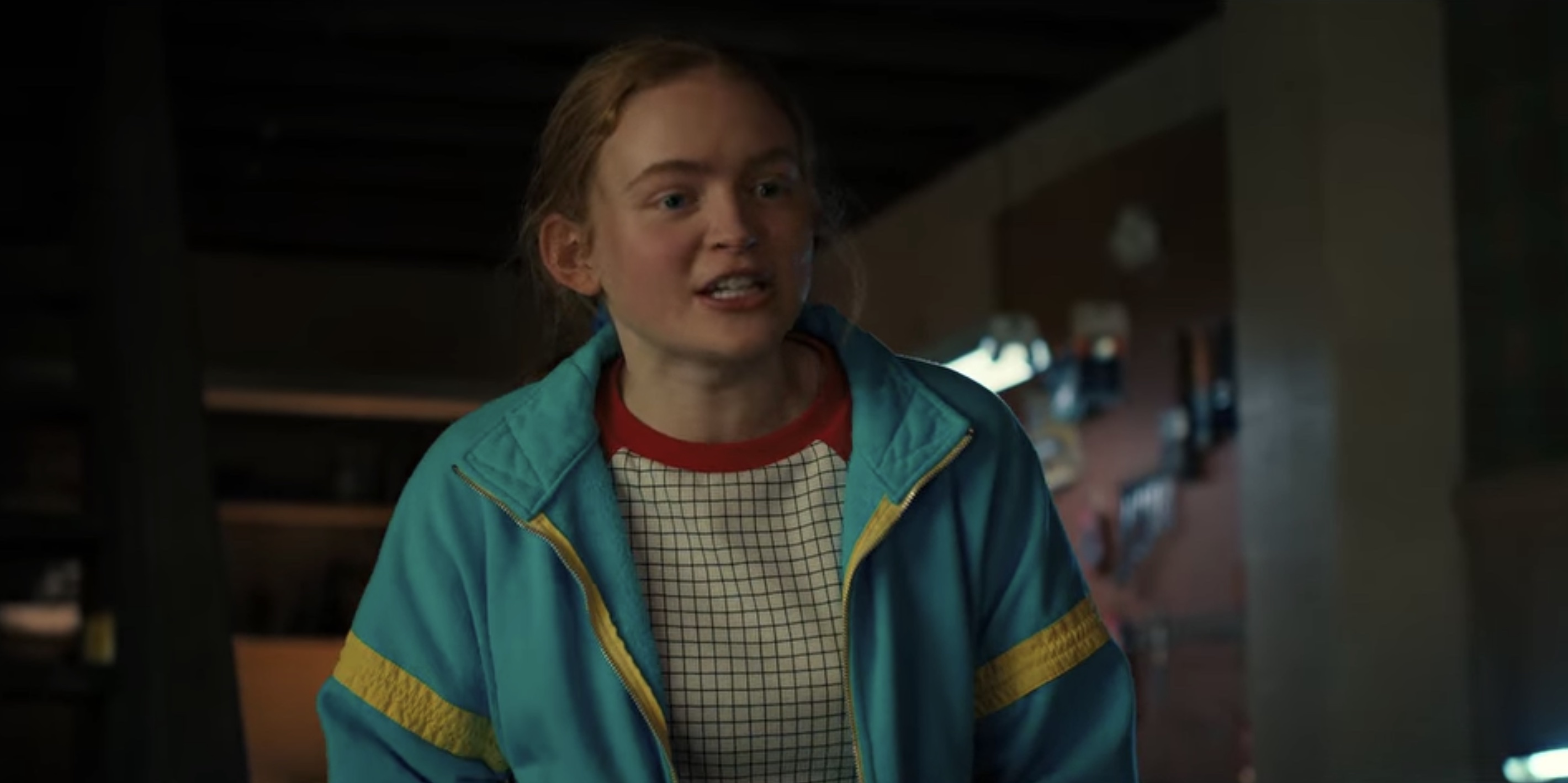
In 404, written by Paul Dichter, we get Max offering an absolutely perfection of this. The out of nowhere twist at the end of 403 is that in fact she is Vecna's next intended victim. And where her friends are all like, we're going to protect you from this thing that we don't at all understand, she has seen so much bad stuff in her life (including last season) that her own attitude is acceptance. She writes letters to everyone she cares about and goes to visit the grave of her dead psychotic stepbrother Billy. It's just a matter of time. 

And at one point in the middle of it all, sweet sweet Lucas tells her not to give up, it's going to be okay. And this is how she responds: "I don’t need you to reassure me right now and tell me that it’s all going to work out, because people have been telling me that my whole life and it’s almost never true. It’s never true." 

It's a perfect Mission Statement. In fact it's a twofer--it both captures Max's experience and reality, and the whole cast's. You look at Eleven, Will, Joyce, Hopper, etc. and it's all the same. Their lives pre-show are filled with loss. And within the show there has proven to be more hope, they successfully face each new level of nightmare. But at the same time it never ends. The jury is very much still out on whether they all make it out of the show alive or okay. 

The writing doesn't dwell on any of this. We don't have the group suddenly saying, Oh God, that's my life, too. And that's part of what makes it so successfully. It says its piece and moves on.

Stepping back, here's what we can learn from episode 404 about how to do a mission statement well: 

1) Organic, Not Instant: When you're writing you really want to make it clear who your characters, what their essential problem is. But at the same time you have to wait for the right moment, that is, the moment where that information would come naturally. If you don't, it will come off as on the nose, that is, the characters are not speaking like they normally would. When we really  mess it up, the audience can pretty much see us standing there with our hands up our characters' backs, getting them to say our words. 

The Max moment works because it's completely organic to the situation. She is reacting to reassurance that she knows to be bullshit. And because it's organic it's also a surprise to us. It's like out of the blue the smoke clears for an instant and we get a moment of perfect clarity. We could not have seen it coming. 

Another way of putting this, which I've talked about before, is that her statement, which is a kind of exposition, really, takes place within a real conflict. And as a result of that, instead of coming off as exposition, it comes off as part of the verbal duel she's in.  

2) Be Brief, Be Brilliant, Be Gone: Max's response is just 37 words. That's all she needs. I'd love to know if Dichter had it that concise right away. My guess is no, he went through drafts before he got to this finely distilled statement. 

Brevity and brilliance kind of go hand in hand here, or at least they do for many of us. So much of scriptwriting is distillation, filtering away everything you don't need until you're left with something pure and simple. And the character says it, and moves on. 

3) It Should Give the Character Wings: Max's statement has momentum to it. That is to say, it points her in a direction. Life sucks, I'm doomed, so I'm going to do what I'm going to do.

This is why I call it a "mission statement." Even as it's a statement of identity, it's never just that. It sets the character in motion. And here, as it's also a mission statement for the show as a whole, it sets not just Max in motion, but everyone else. She's making her peace with the world; they're responding in the opposite way, but they're both responding to that same prompt. 

A mission statement articulates the central problem or dilemma of a show. And being confronted with that problem should cause everyone to make choices. 

When it doesn't, when it's just sharing, it almost immediately becomes dead weight. By its nature it begs for a response. 

Again, mission statements can be a little dicey in a pilot; if you don't tread lightly, they'll see you doing it. But still, if you want an exercise to try, watch a random pilot. (If you want a suggestion, watch the pilot of EUPHORIA. It's so smart.) And pay attention for a mission statement or statements. What are they? Where are they? Do they work? If not, why not?

++

Here's one more thing to remember about a Mission Statement. If it's done right, it really sells the audience on the character.  404 is Max's episode with or without that statement to the guys, but in saying that, she's established her own terrible stakes, which she'll spend the rest of the episode dealing with. And when she finally decides to fight back, to try and escape Vecna, it's just so damn satisfying in part because she articulated at the start how impossible that was. 

People love Jane, but I have to say, this season it's been Max that's the beating heart at the center of the show. Love her so much.