Monday, March 15, 2021

A WEEK OF WANDAVISION BONUS EPISODE: DEEP DIVING INTO A SCENE FROM 108

Before moving on from WANDAVISION, I thought it might fun to dive into one short dialogue scene that I loved from episode 108 (by writer Laura Donney), and think about why it works. 

It's the flashback about two thirds of the way through the episode where Wanda sits staring at a sitcom as she reels over the death of her brother Pietro.

After a couple lines getting Vision into the room, the scene has three main parts: 

  1. Vision tries to understand why Bryan Cranston getting crushed by a roof on an episode of MALCOLM IN THE MIDDLE is funny; 
  2. Vision asks Wanda how she's doing, she shares the sense of being overwhelmed and he reflects on that;
  3.  Vision laughs at something onscreen, then apologizes, and she reassures him it was in fact funny, which makes him very happy. 

Within that second, main part, here are the beats: 

  • Vision offers to listen if that would help Wanda; 
  • Wanda wonders why he would think it would;
  • Wanda tells him it wouldn't; 
  • Wanda apologizes and does share what she's going through, how overwhelmed she feels. 
  • Vision responds by saying he doesn't think her loss will overwhelm her, and explains why by sharing his own experience being alone. 
Part of what's interesting about the scene is how little conflict there is. Usually conflict is the engine of story. Also it's the mask in which you can safely hide exposition (aka a person telling us directly how they're feeling). But other than a moment at the beginning, there's just not much of that there. It's like the setting itself, completely with flash or drama.

And yet the scene flows really well and the things that Wanda and Vision reveal feel earned. 

Maybe that's because there is actually conflict in the scene, in the form of the pain that Wanda is going through, the loss she's suffered. What possible value could some sort of disagreement or misunderstanding add to that? It's like a guy wearing a hat on a hat but it's also at a funeral and so why is he doing headwear anyway?  

So that's my first thought: The scene works as well as it does because it stays always connected to the reality of the moment it's in. It doesn't let external notions of writing structure or anything else get in the way of trusting in the truth of the situation.

It's also a scene in which each character shares something that is both personal and also deeply insightful. Wanda describes what it's like for her to be grieving. Her metaphor of the waves knocking her down is evocative of her experience and also gives words to many other people's experience with the nightmare that is loss. 

Vision's response has the same two components. The beginning and the end are together this profound thought about grief--that it is love persevering, and so it won't destroy us. It can't all be sorrow, can it?, he asks, in a line I am deeply envious of.

In between he shares about himself, his experience of always being alone. In a sense this has nothing to do with what we're talking about. And for the character of Vision it's actually not an attempt at self-disclosure as much as an observation on his existence. 

But for us in the audience (and Wanda) what he's saying is moving and eye opening. You see Vision different after that scene.

So for me, the second reason this scene is so strong is that it gives us new things to chew on--first, new insights into Wanda and Vision; and second (and maybe more importantly) new insights into our lives. Literally, we walk away from that scene with a new way to think about grief. When you can deliver a gift to the audience while still staying grounded in the reality of the characters and their relationship, you've got them for life. Who doesn't like a surprise goody bag?

The other thing that I love about the scene is the bookends. We open with and on humor, and after we've taken the journey with Wanda and Vision through life and loss the writing circles back to it, and it's at one and the same time a surprise, because it's such a different tone than where the scene has been, and yet also fulfilling, in that it feels like we've come full circle.  

The opening of a scene is like the set up of a joke. Returning to it at the end is naturally satisfying for the audience. 

But the ending doesn't just return to the initial subject. It comes back to Vision's need. He wants to understand humor. At the beginning he tries and fails. At the end he laughs, thinks he's failed and Wanda tells him no, it's funny, and his reaction is Yes, it is, right?

Paul Bettany's performance is so perfect at capturing the quiet comedy of Vision's need to get this.  

This a two minute scene, but only twenty lines of dialogue, and most of them just a couple words, a single sentence. But there's just so much there. Brava, writer Laura Donney!

++

So I've been doing this for about three weeks now, mostly as a sort of practice run to see if it could work. I'm not totally sure that Blogger is going to be the platform I need it to be. I may take a couple days and try to migrate it to WordPress. 

Either way, here's my plan for the rest of the week: I'm going to talk about the pilot of FREAKS & GEEKS, which I saw for the first time last week *hangs his head in shame*.

Then for the next two weeks I'm going to dive into the Oscar nominees for Best Original Screenplay and Best Adapted, which will be announced today, and see what cool tricks we can find there. 

UPDATE (3/17):  With the release of the Snyder Cut I'm going to do some pieces on the Snyder DCverse at the end of this week and at least the start of next week. But we will get to the Oscar nominees right after that!


Saturday, March 13, 2021

A WEEK OF WANDAVISION: 108 & 109--THE CHALLENGES OF BEING A JJ (PART 2)

Yesterday I dug into the writing challenge of doing the Big Reveal.

Today I'm looking at the other big writing challenge of a finale like WANDAVISION--THE SUPERHERO SMACKDOWN.

Let me ask you a question: If you were to think about the battle "half" of the finale (it's actually the first three quarters)--What's the moment that most stood out for you? 

For me, it's the Not-Quite Vision/Real-White Vision conversation about who is the Real Vision. 

Anybody else say the same? 

Why is that? 

Here's what I think: It's ONE OF THESE THINGS IS NOT LIKE THE OTHERS.

At this point, most superhero battling kind of blurs together. Whether people are punching each other, throwing balls of energy or ramming into stuff with ice cream trucks, on another level it's all pretty much the same thing. Marvel is in some ways a victim of its own success, in that there's really no version of punching and winning/losing superhero fights that it and its cousins in the other PG-13 superhero universes haven't already done. 

The specifics of the showdowns, even the likely resolutions are mostly familiar at this point. Like, didn't we all know on some level Wanda was going to end up Trojan Horsing Agatha, or at the least consuming her power? 

And of course it was going to be Vision against Vision, with lots of x+∆+∆ punch-phase combos, and Monica was going to end up facing down against SWORDBro--although weirdly, after working so hard and so well to build her up as a character, she really doesn't get that much to do in the Battle Royale. In a sense her battle moment in the finale is really there just to finish Act I of her super hero origin story by showing a bigger use of her powers. 

There are only two scenes in the whole Wanda Marvel Battle Extended Remix Delite! that are not like this. The first is where the people of Westview are set free of their brain traps and beg Wanda to let them go. Which has some horrifyingly nice reveals in it--they all feel her sadness all the time, and some of them can't even remember who they were any more.

But we have already had a number of moments like this where West'ers are temporarily set free, or where it's clear that they experience themselves as trapped.

The only moment that's altogether new is the two Visions stopping their battle to have a chat.

I love that they even set the scene in a library. It might as well have a WELCOME  NERDS sign.

The scene that ensues has three nicely distinctive elements, too. First, it begins with a philosophical conundrum, the Ship of Theseus. As the tens of thousands of think pieces written after THE GOOD PLACE did the Trolley Problem demonstrate, people love chewing on philosophical puzzles. It's just plain yummy for the brain. 

This is a pretty good one, too. If I am always changing who am I? Or where is me?

At the same time, second, the writing zags away from the typical "How To Defeat an AI" move, insert a paradox that blows its circuits. It looks like that's where it's going at first--uh oh, He's not the Real Vision, I am... Argh... Contradiction... Must... Destroy... Self...! But then we get none of that. 

(Please God Please can we never write that plotline again? If computers are so smart they can think and fly and wear white after Labor Day, surely they're smart enough to recognize when someone is attempting to Murder Paradox them and shut it down.) 

Instead, Third, the sequence becomes a chance for RW Vision to choose to be liberated, to be free. People struggling to make choices to be free is always compelling to watch. And as quiet as it is, there are a couple beats of real struggle here--RW Vision hesitates, backs away even, before finally deciding to accept what NR Vision is offering, his memories. 


As I'm writing this part of me is All Caps screaming, Yes, but RW Vision was introduced literally like 5 minutes ago. Why should him getting free mean anything at this point? We're worried about Our Vision and Da Boys. 

I think for me the reason it works is because on another level the whole series has been about the Real Vision being trapped. He's trapped in the fiction of Westview of course, but ultimately he's also trapped in death and/or the hands of Team SWORDBro. 

Your mileage may vary, but I wonder if that incredible sequence in 106 where he's risking his life fighting like hell to get out of Westview--and doing so to try and save the people trapped within--didn't in effect build the emotional runway for this moment in the finale. Like it imprinted on us so deeply the pain and wrongness of Vision trapped that any version of that happening feels like The Win We Want (even if we're also at the same time distracted by the question of how this other Vision is possibly going to be able to deal with smudges on that costume).  

++

The finale ends in sadness, as on some level we knew it probably had to. Some devastating moments in there. (They tucked their kids in AND THEN THEY WERE ERASED FROM REALITY, YOU GUYS.)


...But at least we'll always have Westview. 
 
NEXT WEEK: A Li'l Deep Dive into One WANDAVISION scene! FREAKS & GEEKS! OTHER STUFF!


Friday, March 12, 2021

A WEEK OF WANDAVISION: 108 & 109 - THE CHALLENGES OF BEING A JJ

Episodes 108 and 109 are WANDAVISION's big finish. In 108, "Previously On", written by Laura Donney, we finally get answers as to Wanda's powers, and also learn the secret origin story of Agnes/Agatha. And in 109, "The Series Finale", we have our big battles -- Wanda vs. Agatha/Vision v. Vision and resolution/new normal for all our characters. 

Each of these episodes faces an interesting writing dilemma, both of them in a sense related to the notion of conflict in the story. Today, I'm going to look at 108. Tomorrow, 109.

108: THE PROBLEM OF THE REVEAL EPISODE: EXPOSITION HAS NO CONFLICT

Shows that are built around a central mystery tend to struggle with the moment of reveal. And that's because having spent a season building up the mystery, laying it out is going to take time. Which means that usually the reveal episode is a momentum killer. 

And 108 is absolutely a case in point. We leave 107 with Wanda's kids having been kidnapped by the next door neighbor who it turns out is a villain so powerful that Wanda's reality-warping--which has been able to affect everyone and everything, does not affect her. These are potentially very high stakes, which are then amplified even more by the episode's opening reveal that Agatha's main power seems to be the ability to suck other magic users dry. If she were to start absorbing Wanda's powers, worse than killing Wanda, it would kill her family. 

But then, instead of going in that direction, we in effect get a clip episode, what Agatha herself calls out as "reruns", in which Agatha and Wanda just revisit the pivotal moments of Wanda's life, trying to discover where her new powers have come from. The episode tries to justify this by saying Agatha needs to understand what's going on. But it's never explained why she needs that, why she doesn't just try to take Wanda's powers.  

And that's because really it's not something her character needs--she's just going to try and steal the power next episode anyway--it's something the writers need, in order to build to this final reveal of The Scarlet Witch (who for some reason is actually more a Mustard?). 

There are some great moments in there; the sequence of Wanda and Pietro with their parents, watching DICK VAN DYKE when suddenly the bomb goes off is absolutely devastating.

Except it's also not devastating, because it's just a memory, and because each of these moments is really only important as another breadcrumb toward the reveal. 

(Still, it's a great sequence to study: In two minutes we have to meet Wanda's parents, see the family dynamic, introduce and land the whole sitcom concept and love them all so much that we really feel it when they die. Donney does nice stuff in there to create that immediate sense of intimacy.)

Consider how much more powerful that sequence and those that follow would have been if instead of conceived as CHRISTMAS CAROL walkthrough, somehow Wanda and Agatha actually got thrown into her past -- Agatha tries to suck out her power and somehow it backfires--and were actually experiencing it as though for the first time, with none of the security, the "It'll All Over Be Soon" of a memory.

The difference is this: that version has real stakes, and real conflict. Wanda has something she has to fight for and also against. Just like she has had every other episode. 

Storytelling is all about conflict. When you take that away, even just for a scene, everything starts to sag. 


A lot of the ep: Our hero and antagonist standing there watching.

Compare 108 to the sequence in 106 where Pietro gets Wanda talking about what she's doing. Every single moment of that scene feels fraught. She has never talked about any of this with anyone, and who knows what he might do with it or even just what acknowledging what she's doing might do to her. 

As I said yesterday, for me it's one of the most exciting moments in the whole series--and it happens in the context of ongoing events, rather than hitting pause, which is really what 108 does, and what so many Reveal Episodes do.  

If you're writing a mystery show, that's the challenge--to find a way to do your reveal without having to stop the bus. 

TOMORROW: SUPERHERO SMACKDOWNS


Thursday, March 11, 2021

A WEEK OF WANDAVISION: EPISODE 106, "ALL-NEW HALLOWEEN SPOOKTACULAR!"

Written by Chuck Hayward and Peter Cameron, Episode 106 takes on the format of a Disney Channel or Nickelodeon-style kids TV show, complete with Tommy and Billy positioned as the main characters (at first), a holiday to build the ep around and a famous guest star imagined as a fun relative.

Along with 104 it's my favorite episode of the season, and once again I've been wondering what it is that makes it so satisfying. I think it's really just one technique, used in a couple different ways:

GIVE THE PEOPLE (SOME OF) WHAT THEY WANT. 

Over the course of 105 the twins go from newborns to tweens. Once they're there the obvious question is, Who are these kids and what are they making of this whole thing? 

And that's a big part of what 106 gives us: the opening credits are designed as though from their point of view of their family, and over the course of the episode until things get really serious we keep returning to Tommy as narrator, sharing his observations of what's going on.

It's useful to get other points of view on the Westview reality, but for me even more satisfying is just the delight of getting to hang out with these two new characters, who are both such fun. 

The introduction of Quicksilver works similarly. His presence elevates the episode simply by virtue of the fact that he's so entertaining. (Evan Peters is such a treasure.) 

But then he also becomes a means to something else we've wanted from the beginning: Wanda's own take on what she's done. 

As always, the writers are brilliant at matching the tropes of their sitcom periods to the needs of the story. Little brother coming to town, knowing his sister like nobody else and giving her the chance to open up about the challenges of being a mom controlling a bottle universe and everyone inside it is just classic stuff. 

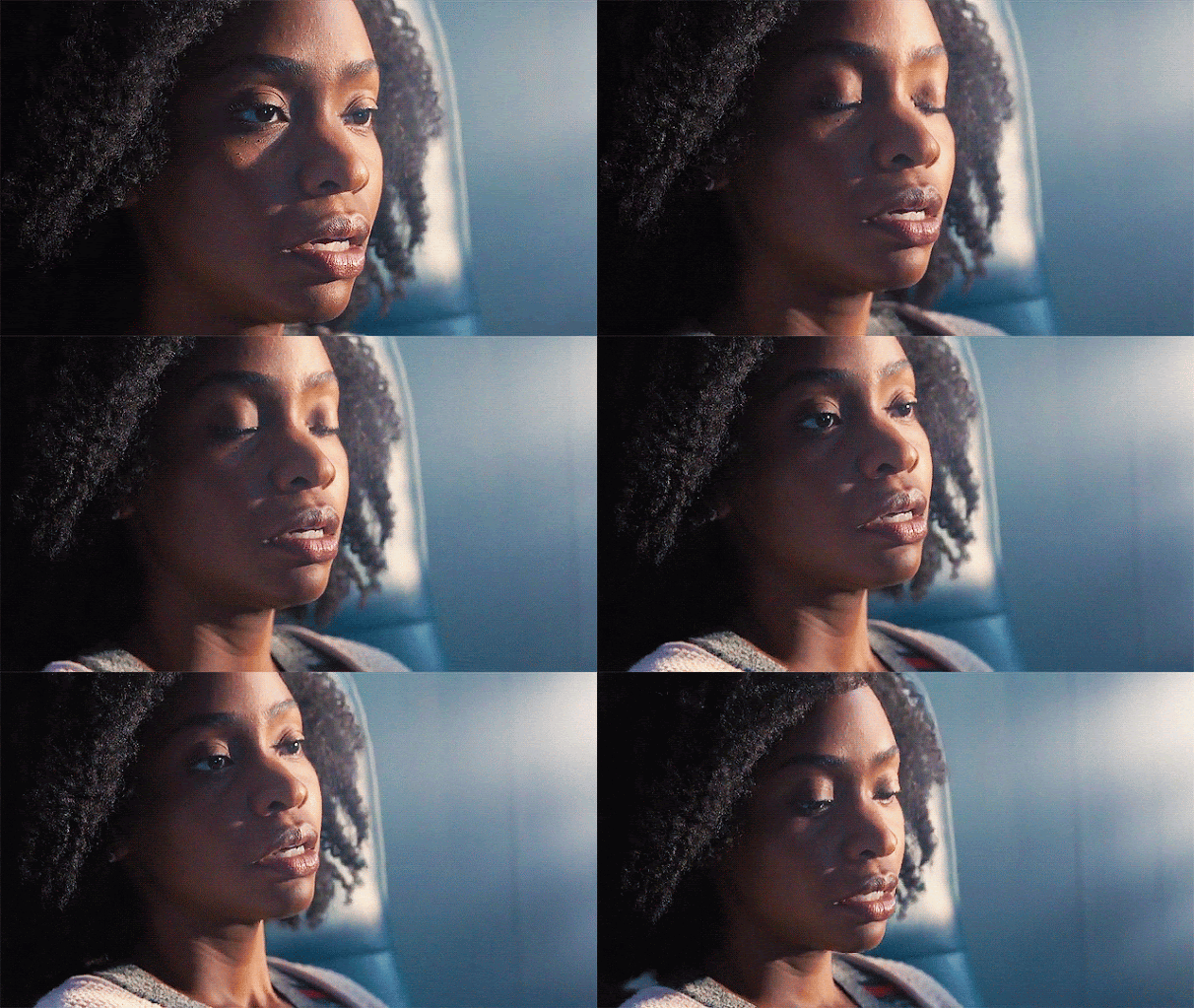
And I don't know about you, but for me that scene near the end where he's admiring what she's done and you see her finally let down her guard with someone else for the first time--she gives that amazing look (below)--is one of the most exciting moments in the whole series.

I could seriously have watched just this conversation for ten more minutes. It's actually the peak moment for Wanda's character in a lot of ways. The episodes that follow start to back away from the idea of Wanda as in control and aware of what's going on, in favor of the idea of her more responding instinctively and unconsciously. Here she owns what she's been doing; that's always a more exciting and empowered position for a character.

In terms of series high points, 106 also has Vision trying to escape Westview. And while I wouldn't say we've been waiting exactly for him to make that attempt, certainly the whole concept of a group of people being trapped naturally calls out for us to see some kind of escape attempt. 

The moments of Vision fighting to escape, begging the people watching to help the townsfolk is everything you want in a Marvel series: it has heroic self-sacrifice, pathos and an underlying sense of tragedy. Plus it's painfully gorgeous to look at. 

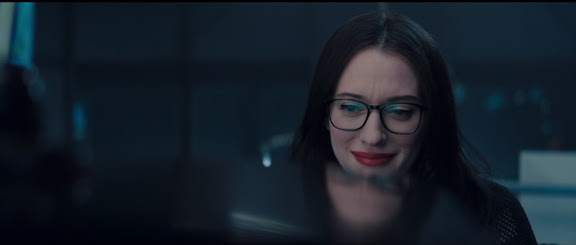
Having Kat Dennings' Darcy on hand to cry out for Vision is a nice touch, too. She really adds to the sense of both danger and loss. 


Wednesday, March 10, 2021

A WEEK OF WANDAVISION: #104, "WE INTERRUPT THIS PROGRAM"

Along with fantastic kid-TV episode 106, 104 was my favorite ep of the series.

I've been wondering why exactly that is. What made it pop like that?

Three Ideas...

1) THE CATHARSIS OF ESCAPE

After three episodes of being fully immersed in the world of "WandaVision", in 104 we finally get to step outside. And that is an inherently cathartic experience. In fact, for the first three episodes we've actually been much like Monica, trapped without even really knowing it. And now, just like that, we're free. It feels good.

2) WHEN STARVING, ALL FOOD IS GOOD

As I wrote the other day, WANDAVISION is essentially a JJ, a mystery box show. And in a sense the way JJs work is by starving the audience. "There is a crazy big meal here waiting for you", we're told at the beginning--in the case of WANDAVISION, literally through a meal which goes very bad. 

Then, now that we're hungry, each episode gives us just one new little crumb -- There's something weird about this place; there's something outside trying to get in; Monica came from outside. Each new bit of information only makes us more hungry. 

And so then to be allowed a whole episode in different settings, with new characters and new data is enormously satisfying. And what's weird is that this is true even though the episode actually gives us almost nothing new about what is going on inside Westview.  Yes, we see what it looks like from the outside, and we see the way in which things get sucked in and changed. It's all very cool, but in terms of the real meal we've been promised, it's not a lot. In fact, mostly we're just meeting other people like us trying to figure this thing out.

But it turns out it doesn't matter. We're starved. We'll take anything.

So there's a wonderful sleight of hand going on here. We re-enter Wanda's universe at the end of 104 feeling like we had a five course meal, but actually it was just a foot long sub. 

3) EVERYBODY LOVES A RASHOMON 

Seeing the events of a story retold from another point of view is always fun. I think it has something to do with the implicit trust that we place in storytellers. We generally assume that whatever it is they tell us or show us is the only stuff that's important to know.

When you suddenly introduce another perspective on the same events, it's like finding buried treasure in your backyard. This thing that you've accepted to be just one way suddenly has so much more to it, and even more to consider. Like how were there pirates in the suburbs of Chicago in the first place? And where can I spend to doubloons? 

In the case of 104, this is doubly true. Yes, we get the point of view of Monica, Jimmy, Darcy and  Director SwordBro on Westview. 

But even before we get the most incredible Rashomon of all: the Blip Return from the point of view of an ordinary person. 

Monica's scene in the hospital is absolutely gripping, and reveals just how much there is still to explore about the great return, how many really cool stories we've yet to hear there. Starting like that basically sets up the idea that this episode is going to give you a radically take on something you know.

BONUS REASON: EVERYBODY LOVES AN ORIGIN STORY


The opening also sets up the episode/season as the origin story of Monica Rambeau. 

But it's also an origin story for Team Awesome, aka Monica, Jimmy and Darcy. In fact 104 is an episode worth watching just to learn how to build a great team fast. In 25 minutes we get a sense of who they each are, their talents and fun interrelationships -- Monica the Brave Leap Firster, Jimmy the Nerdy Protector, Darcy the Ironic Genius who Secretly Loves Everyone --and also their common enemy: Military Dudes.

I would seriously watch a spinoff show just about them after just this episode. That is some tight writing from Bobak Esfarjani and Megan McDonnell. 

In the words of a droid I love:  


Tuesday, March 9, 2021

A WEEK OF WANDAVISION: OPENING GAMBITS

WANDAVISION is a great show to watch when thinking about openings. 

Within the first couple lines, most of the episodes signal clearly what will be the  central question or conflict of the ep. So 101 starts with Wanda looking at a calendar and realizing she forgot something; the episode is all about them trying to figure out what that is.

102 starts with Wanda hearing a strange banging coming from outside, and then the ep is all about something outside of Westview that keeps trying to get in. 103 starts with the town doctor examining Wanda and declaring, "Yep. Definitely pregnant," and Vision mystified. "How did this happen?" The episode watches him start to wonder about exactly that.

In many cases the initial dilemma of a WANDAVISION episode also links tightly to the next episode. 102 was all about fear of invasion, which Wanda thinks she resolved, but then 103 is about both the sudden invasion of the twins and Monica, who Wanda will discover is an invader into Westview.

Likewise, 103's opening question How did this happen? sits pretty close to where we meet Monica both in terms of Westview and the Blip. 

It's very unusual to see openings linked in this way. And I'd say perhaps I'm just  giving the show an overfirm dose of English Major, except the links between openings serve an important story purpose. The entire series has Wanda fighting to keep control over the bubble world she's created. Having conflicts or questions from one issue bleed into the next is a way of signalling that she is failing. 

So: in 101 she has this one question she can't answer nagging at her, and she resolves only to start 102  with a new question. In 102 she keeps out the intruders, only to open 103 with babies suddenly inside her growing by the minute, and another intruder soon to be discovered. In 105 wants a chance to rest (aka for everything to calm down), and in 107 we open on her finally asleep, but only as a means to try and hide from the chaos now almost completely out of control.


Sunday, March 7, 2021

A WEEK OF WANDAVISION: PILOT, "FILMED BEFORE A LIVE STUDIO AUDIENCE"

WANDAVISION finished its first (and maybe only?) season on Friday. It's been another smash for Disney+ and also Marvel Studios' first foray with the still-relatively-new streamer. 

Given its popularity, I thought this week I'd take a look at a bunch of different episodes and consider some of the techniques they use to tell the story--some that land well, and maybe also a couple that don't. 

The pilot, by showrunner Jac Shaeffer, is enormously interesting. Like all pilots, it needs to set up the show, to establish the characters, the world, the conflict. It needs to tell us what we're going to be watching from week to week, and also why we should. 

But here the conflict of the show is that the world and the characters are not who they seem to be. And more than that, none of them know it. It's a Mystery Box Show, in other words. Or if you will, a JJ. 

The upside of JJs is that they generate a lot of heat. People love cracking a puzzle. 

The downside is that they're often not terribly emotionally satisfying. In part it's because the end reveal almost never lives up to the attention that it draws. It almost can't. 

But the bigger issue is that a puzzle is not a story. Rather than inviting emotional investment in characters, it actually requires a certain detachment. We want to step back, in fact, so we can figure out what's going on.

WANDAVISION goes the additional step of setting the pilot in a 1950s sitcom--a move that both highlights the "off-ness" of what we're seeing and also would seem to make everything that much more meta and emotionally removed. 

But instead of treating the genre ironically, Schaeffer invests in its conceits. We get the big dinner with the boss who could make or break your career; secret embarrassments and drama going on around the cooking--all the craziest stuff in 1950s shows happen in the kitchen...

Tell Me You Wouldn't Have Watched A Fricky Spinoff

We also get each character having to improvise to protect the other in the most ridiculous way possible--I will now and forever call Paul Bettany "Diane"; and the nosey neighbor who instinctively focuses on the exact thing the characters would least like to discuss. 

And each of those genre beats is used to lay out who Wanda and Vision are and the wonderful, hilarious partnership that they share.

Also the nature of the world they're living in: 50s sitcom couples are like Adam and Eve in the garden, walking around wondering Can You Believe This?, while helping each other get free of all the vines and snakes. It's about a fun and loving partnership in a crazy world. And that's exactly where Wanda and Vision are at the start of this series. 

The pilot is filled with quiet allusions to the sense of something being askew: it begins with the fact that there's something neither Wanda nor Vision can remember; Vision works at a company doing a mindless task that no one seems to understand the purpose of.  When they talk on the phone Wanda insists she has everything under control, while Vision fears if the dinner doesn't go just right, it could be the end of everything. And there's the suddenly horrifying low point with the boss choking and his wife unable to stop saying "Stop it".

But until that very last beat set in the world watching "the show", the episode keeps pulling our attention back from mystery to the relationship. We end the "sitcom" not on the question of what is going on here, but with the two characters cementing their partnership in marriage, complete with rings, vows, a kiss and a final shot framed like a wedding album photo.


As the series goes on, the JJ of it all does become at times a story struggle. But here in the pilot, the mystery is very much at the service of the characters' relationship. We're invested in what happened with the boss and his wife because it seems like it could threaten this fun and happy couple.

Friday, March 5, 2021

HOW TO REDEEM A CHARACTER: OZARK #309, "FIRE PINK"

Last week and this week I'm featuring TV episodes that have been nominated for 2021 WGA awards. 

So you're working on a show where a character goes dark for a while. Always a great journey to take them on. 

But how do you "get them back"? How do you earn their redemption? 

You Make. Them. Pay. 

It seems obvious, but it's so hard.  More often than not the redemption doesn't come at a high enough cost, which probably means the writing staff loves the character just a bit too much, and so they're cutting corner and hoping the audience doesn't notice. But whether viewers can put it into words or not, they always do.

Sometimes a show will also choose the wrong cost--they cut off the guy's arm, when given what he did they should have done something that cut out his heart. Or the journey from bad to good happens too fast: FRINGE took three seasons to redeem the child-abducting, double-universe-destroying Walter Bishop, and he was actually trying to his Not-Son Peter's life.  

Or we get suffering without resolution--which really means without Choice. We need that scene at the end where the character chooses to face the ones they've hurt, or makes a new, harder-for-them choice on how to move and exist in their world.  

The journey home doesn't end when you land in Chicago, it ends when you choose to walk through your front door and face what you left behind. 

The second season of OZARK ends with Wendy (the terrifying Laura Linney) effectively seizing control of the family business. Marty (the equally fantastic Jason Bateman) wanted out; Wendy went around him, worked a deal with the cartel, and now they're in deeper than ever. 

As we open the third season we see that decision blossoming into Wendy entering into a relationship with  cartel head Omar Navarro himself, while Marty looks on in horror. And it seems like the season is going to be a battle royale of Marty vs. Wendy, with someone not going home. 

By the time we get to the penultimate episode "Fire Pink", written by Miki Johnson, that initial opposition has been complicated by other twists, most especially Wendy's brother Ben, whose serious mental health issues have ended up jeopardizing everything, starting with himself. 

Wendy spends the episode desperately trying to find a way to save Ben's life. It's a great episode to watch for its brutally step by step journey into truth, every moment of denial and possibility from Wendy countered by another terrible decision by Ben, until there is no good choice left to her.  

Is There Any Sad as Sad as Sad While Holding a Milkshake?  

Even before "Fire Pink", Wendy has already faced consequences for getting into bed with Navarro: Her husband is kidnapped and tortured. Her family and the business are put in great danger.

But none of those events strike close enough to home to redeem her. To pay her debt she has to bear some terrible cost on herself. Johnson makes the moment all the more painfully perfect via a parallel: as Wendy got in with the cartel in Ep. 210 by making the decision on her own to have Ruth's dad killed, so must she now decide on her own to have her brother killed. Only with that blood on her hands can she return to grace. 

NEXT WEEK: We Dive Deep into the Tricks and Techniques of WANDAVISION. (And Probably I Mention FRINGE, Because I Cannot Stop Watching or Talking About It.)


Wednesday, March 3, 2021

LUCY & MARY & EDITH & BARNEY & GRACE & FRANKIE Ep #612, "THE TANK"

Last week and this week I'm featuring TV episodes that have been nominated for 2021 WGA awards. 


Here are the two main stories in the Alex Kavallierou's WGA-nominated episode of GRACE & FRANKIE: 

A-Story: Grace & Frankie pitch Shark Tank on "Rise Up", their new toilet seat that rises to help elderly people stand back up, but unbeknownst to Frankie Grace keeps undermining any deal with Mark Cuban because her husband Nick told her she can't work with him.

B-Story: Robert tries desperately to distract Sol from the fact he spent their honeymoon money on supporting his community theatre.  

The stories share a common premise: Somebody has to keep a secret. And the joy of the episode lies in watching the lengths to which the characters are forced to go to protect that secret. In order to hide what he's done Robert decides to sell his and Sol's burial plots, which leads to the hilariously ridiculous idea of Robert and his theatre director Peter doing a burial plot open house in the cemetery. 

(I love that scene so much, but I cannot find a photo from it so please accept this photo of very cute couple Sol & Robert instead:

Sol clearly deserves better but still, they do look pretty wonderful together.)

Meanwhile Grace keeps trying different approaches to avoid Cuban--first ignoring him and trying to get the other sharks invested, to no avail; then, when Frankie says Cuban likes people say no, suddenly cuddling up to him until someone else shows interest; then finally in the end she's completely baffled him, but it turns out he likes that and she instead has to publicly reject his offer. 

If any of this sounds familiar, it's because it's the main plot line of every great classic sitcom you've ever seen. Lucy and Ethel, Dick or Laura, Ralph or Alice, Edith, Barney or Andy, Mrs. Cunningham, Zsa Zsa -- they were forever having to keep things secret, either from someone more powerful than them or from their significant others (often these are the same people...), and then having to go more and more ridiculous length to protect it. 

It's not unfamiliar to more modern shows either: CHEERS, FRIENDS, FRASIER, MODERN FAMILY, all have variations, as does every children's story ever that involves lying.

I don't know about you, but I'm always looking for ways to mix things up when I get stuck. When you get to that point where you can't go forward and really how many tweets from other people can you like in one sitting, what about taking a stretch break and then watching an episode of I LOVE LUCY or MARY TYLER MOORE? 

Who cares if they're old. They're a gold mine of story ideas and comedic construction.

P.S. "The Tank" scene in which Frankie has to demonstrate the Rise Up while Grace narrates is a little comic masterpiece. A must see.

TOMORROW: HOW TO REDEEM A CHARACTER: OZARK''S "FIRE PINK"


YOU CAN HIDE SO MUCH IN THE SUNLIGHT: EUPHORIA

 Last week and this week I'm featuring TV episodes that have been nominated for 2021 WGA awards. 


Okay so today is a bit of a cheat. I haven't finished the first season of EUPHORIA yet, so rather than talk about creator/writer Sam Levinson's WGA-nominated episode "Rue", I want to talk about a writing technique the series uses repeatedly and very effectively: Hiding in the Sunlight. 

A log line for the show: "After OD'ing and spending a summer in rehab, high school student RUE tries to get away with continuing to do drugs while also falling in love with new transgender student JULES, who gets off on having semi-violent sex with straight men in committed relationships." 

It's not a perfect log line, but it does capture one key element on the show: this is the story of hurting teenagers in tough situations. They're like the traumatized teens from LEFTOVERS, except their inciting incident is not the Rapture but the horror of living.

Except most of the time the show doesn't feel that way. As narrator and protagonist, Rue is endlessly charming and wise, personal and funny. "I was once happy, content," she says at the beginning, over a shot of a fetus sleeping in a womb, "sloshing around in my own private primordial pool. 

"Then one day, for reasons beyond my control, I was repeatedly crushed, over and over by the cruel cervix of my mother Leslie. I put up a good fight, but I lost. For the first time but not the last." 

There's real darkness in that narration. But it's also such an unusual point of view to bring to the act of being born, and actress Zendaya's delivery is so rich and in a sense wry, that instead of registering primarily as dark it lands more as interesting and creative. You immediately love this character and want to hear more how she sees life.


The Joy that is Rue

Levinson also makes the unusual choice to use a first person narration as a third person omniscient. Each episode begins with Rue telling the story of one of her classmates, and always from a position of care and good will. She's like a benevolent god figure looking gently down on her peers, even as she's also a character in the story. 

As a result of all this, our starting point with Rue is usually not worry but delight. She's still an addict, using and lying and eventually being abusive to others. But the "shadow" of her brilliance stretches so far, when things start to go dark for her, like when she's suddenly shouting outside her dealer's house in 103, or berating the old friend she's been using to get clean urine, we don't see it coming. 

It's all been right there staring us in the face from the start--again, Rue's fundamental image of being born is about being crushed. But she's just so damn charming and amazing, that's not what we immediately register. 

Jules is much the same. In the pilot she's having sex with a middle aged man who seems scary and violent. In 104 we'll get her backstory, and discover it's got even more pain in it than Rue's. 

And yet as a character Jules behaves like her look, playful and effervescent, a fairie version of Claire Danes. She even dresses like ROMEO + JULIET Claire Danes. 

 At the end of the pilot she'll cut herself with a kitchen knife in front of a crowded room to scare off the nightmarish Nate, then charmingly introduce herself to the room and leave. Once again, the trauma of the character, the dangerous trajectory she's on, is all right there from the start. But Jules' beauty as a person eclipses it all. She's the person you wish you had as a best friend, not a cutter who hates herself. Except She Is.  

As writers we're often weighing what information to share when. Every story wants its Big Reveals.

But EUPHORIA shows how the exact opposite can also be effective: You can show the audience everything up front (or a lot anyway), and if it's packaged in characters who are so wonderful, so sweet with each other, we may easily become too busy loving them, basking in the light of their presence, to notice the darkness within. 


Why is the show called EUPHORIA? Not because the characters live in a hopeful fog, that's for sure. No, "euphoria" is what they (and Levinson) create in us. 

 TOMORROW: LUCY & MARY & BARNEY & EDITH & GRACE & FRANKIE'S "THE TANK"


Tuesday, March 2, 2021

DISTILLING THE CHARACTER DOWN: TED LASSO, "PILOT"

Last week and this week I'm featuring TV episodes that have been nominated for 2021 WGA awards.

I love it when a story is able to capture the essence of a character in a single line or description.

It's not easy to reach that point. Sometimes the fullest clarity only comes later; meanwhile the pilot uses Save the Cat-style moments to serve a similar purpose. The way a person helps someone, how they attack a problem or do whatever they have in order to meet their "cat"'s needs, can tell us so much about the protagonist's skills and personality. 

But distilling who a person is down to a single gorgeous sentence or image, that's the white whale. 

And the pilot of TED LASSO, teleplay by Jason Sudeikis & Bill Lawrence with story by them & Brendan Hunt & Joe Kelly, has a great example. 

American football coach Ted Lasso has just arrived in England to start coaching soccer with his partner Coach Beard. 

And we've just had an unusual kind of Save the Cat moment (pictured above). Ted asks low level staffer Nathan what his name is, then refuses to move on until the guy gets beyond his own sense of being a nobody to actually introduce himself. 

(The pilot is rife with quiet moments like this that tell us everything we need to know about Ted. Another great one comes toward the end: Ted has put up a sign with the word "Believe" in the locker room. And the paper is actually crooked on the wall, but that's because Ted wrote diagonally across it. It looks fine.

Then Keeley, girlfriend of lead scorer Jamie, walks in, sees the crookedness of the paper and insists on helping Ted "fix" it. The end result is that the paper gets completely messed up.  And Ted just smiles and lets it go.

Starting with people where they are: That is Ted Lasso.)

So, the single line: Walking Ted through the team's "hall of fame", owner Rebecca points to a photo of medical tents that were set up on the pitch during World War II. Some people, she says, claim they still see the spirits of the soldiers who died being treated there. "Ooh, that's spooky," Ted says. 

This is what follows: 


That last sentence captures everything you need to know about both Ted Lasso and TED LASSO. 

First, that this show is going to be offbeat hilarious.

Second, that it's going to come from a place of authenticity. Ted looks like like a bit of a dimwit here,  but really what we're seeing here is that Ted Lasso is not afraid to look dumb. In fact he's not really afraid of what other people think of him at all. 

So in the scene that follows he's thrown into a press conference with no prep, no clue, and it is a total disaster. But afterwards rather than being stricken down by it he shrugs his shoulders and moves on. He's not the guy who sweats the small stuff; he's the one who shakes his head and laughs when it happens.

But more than anything what that sentence does is give us a Ted Lasso mission statement. Who is Ted Lasso? He's a guy who wants to help people believe in themselves. Dead people, nameless production assistants, the players -- sure, yes, all of the above.

There's no soccer played in the pilot. In fact Ted barely interacts with the players at all. But the heart of the show--a sweet, funny guy who wants to coach people into seeing and being their best selves--it's all right there in that one line.  

TOMORROW: "TROUBLE DON'T LAST ALWAYS," EUPHORIA